ATC anti-sway system
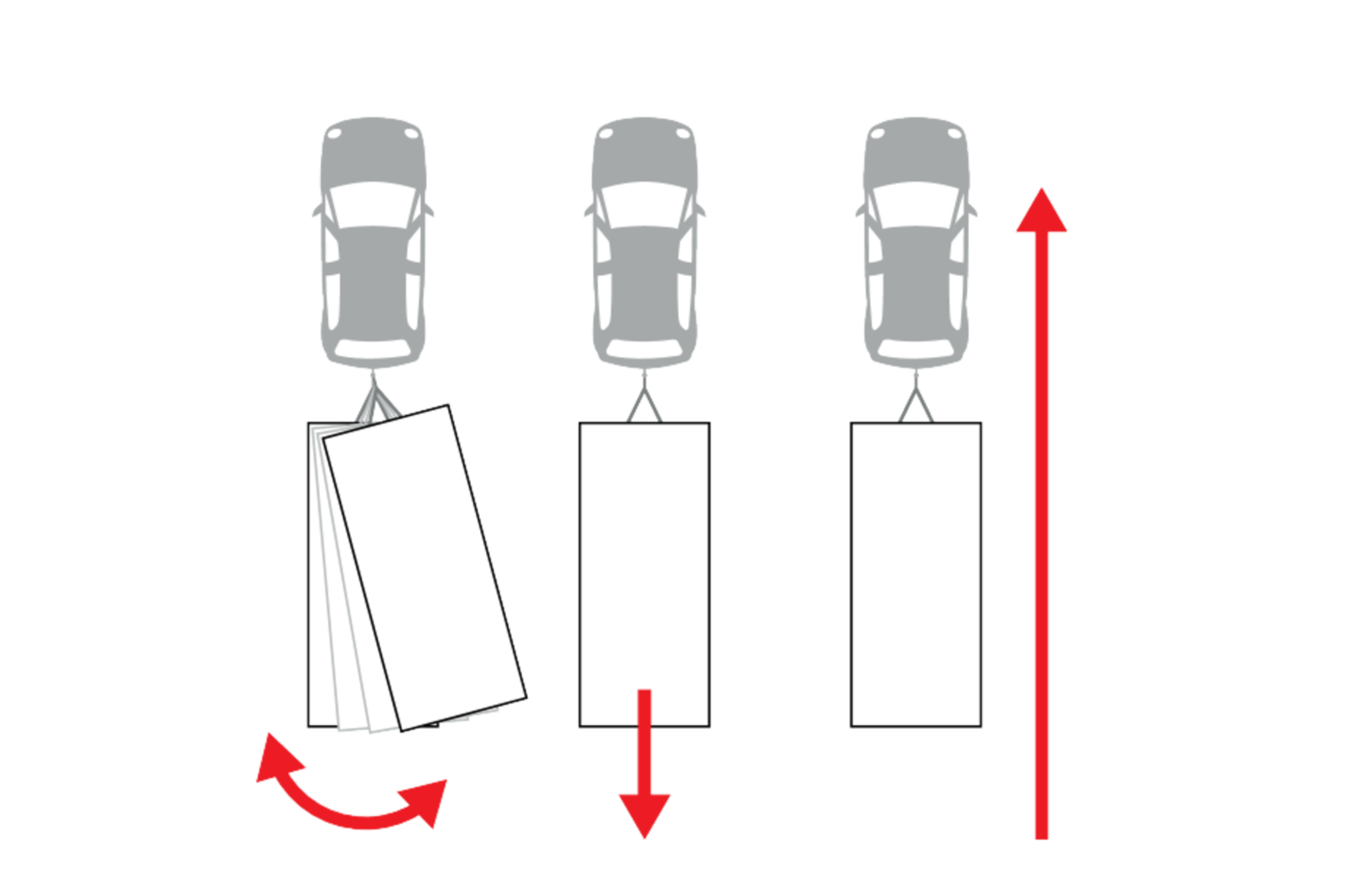
Ruts on the motorway, an overtaking lorry, sudden crosswinds on a bridge or a few kilometres per hour too much on the speedometer – and it happens: the caravan or utility trailer begins to oscillate and in the worst-case scenario can cause your whole combination to go completely out of control in a matter of seconds. We've probably all seen images of such accidents – there is usually not much left of the trailer afterwards.

“As Product Manager for anti-sway systems and ATC expert, I am particularly pleased that we can now offer the ATC not only for single- and tandem-axle, but also for tridem-axle trailers. Whether camper or boat owner, showjumper or carpenter, antiques dealer or veterinary surgeon on home visits – with the ATC you can tow all kinds of trailer, whatever their build or weight class, safely and with confidence, and have no need to worry about your valuable cargo.”
Greater safety for caravans and utility trailers with ATC
The electromechanical anti-sway system from AL-KO VT
There are various ways to counteract the risk of your trailer starting to sway – quite literally – while driving. Alongside anticipatory driving, correct loading, and a mechanical stabiliser coupling, it is highly recommended to install an electromechanical anti-sway system (ATC). The ATC detects even the slightest swaying movements and brings your trailer back on track.
Let the reaction time work for you
- Constantly monitors the lateral movements of the caravan or trailer
- Acts sooner and more effectively than stabilisation systems fitted to the towing vehicle
- Intervenes gently to restore a stable driving condition
- Achieves optimal effectiveness with the proven AL-KO braking system
ATC: Precision sensors provide help in dangerous situations
Sophisticated electronics to counter trailer sway
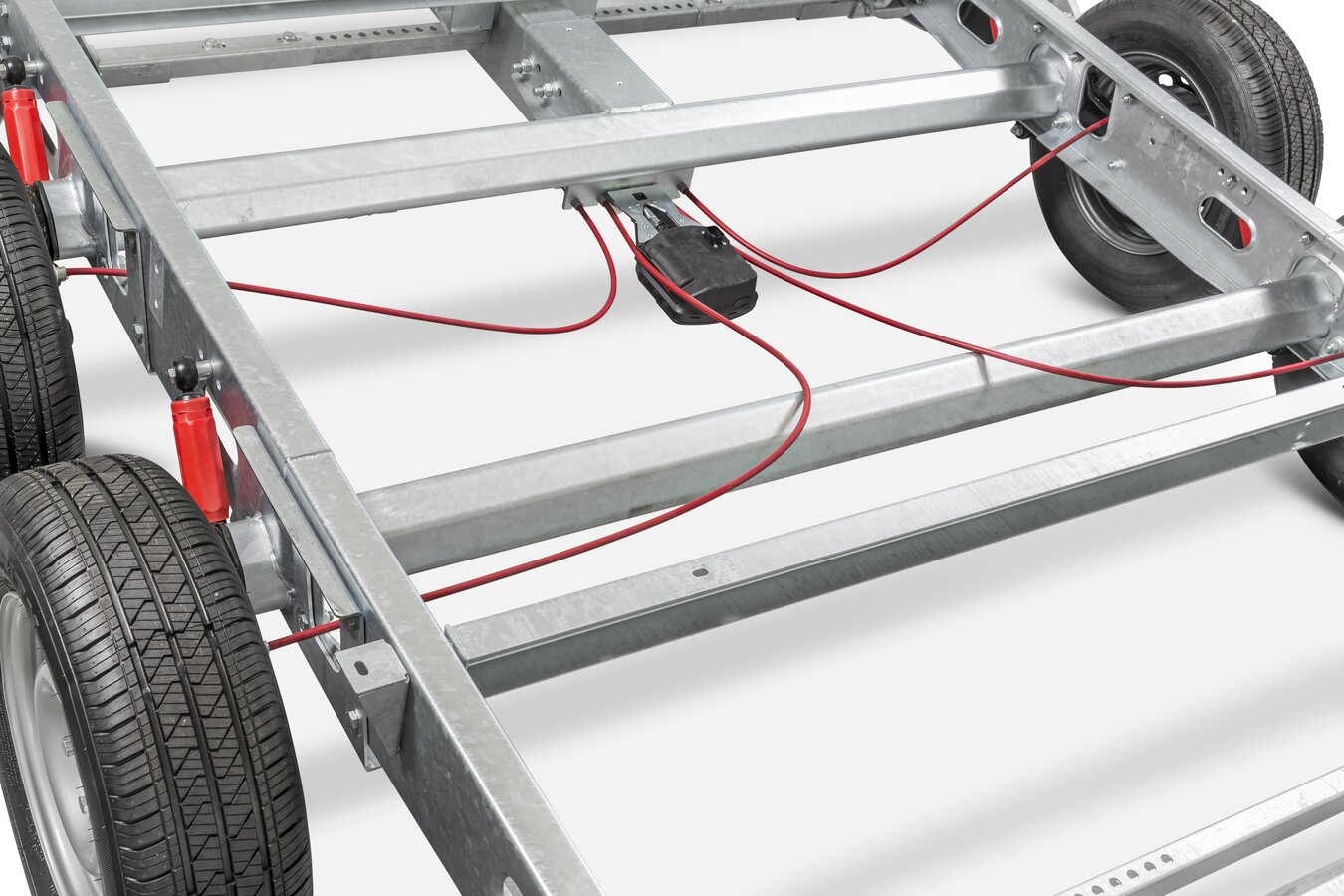
The functionality of the ATC is based on sophisticated electronics: So-called lateral acceleration sensors constantly monitor the swaying movements on the trailer axle. If these movements exceed the tolerance range stored in the system, the ATC activates.
Specifically, this means: as soon as the caravan or trailer starts to sway slightly – for example, due to excessive speed or a gust of wind – the sensors detect these sideways deviations and the ATC gently applies the trailer brakes using Bowden cables. This quick but effective intervention straightens and stabilises the whole combination.
As a driver, this feels as if the vehicle combination is 'floating' for a few seconds, a sensation similar to gently drifting aboard a slow-moving ship. There is then a brief moment when you feel a light braking action, after which everything returns to normal.
Incidentally, the ATC records every intervention. If you are interested to know whether fitting the system has been worthwhile, a specialist workshop can read out how often the system has responded during your journeys.
Which caravans or utility trailers are suitable for the ATC?
The ATC can be installed in all caravans and utility trailers with an AL-KO VT chassis from model year 1998 onwards and a permissible gross weight of up to 3.5 t. If the manufacturer does not offer it as a factory option or if you own an older trailer, in most cases the system can be retrofitted without difficulty.
It makes no difference whether the trailer has one, two or three axles. AL-KO VT offers the right solution for all three versions. This means you can equip not just your caravan but also horse trailers, vehicle transporters, machinery trailers, sales trailers, tipper trailers and many other types with this vital safety feature. You only need to ensure you select the correct weight class for your caravan or utility trailer.
If you are unsure, please contact us at any time. For advice and installation, several hundred AL-KO VT dealers as well as various AL-KO VT customer centres are available across Europe.
What is the difference between the caravan ATC and the utility trailer ATC?
Weight fluctuations due to payloads are crucial
While the ATC version for caravans is designed for a relatively constant weight, because they usually carry only a small payload, the version for utility trailers is even more intelligent: it automatically adapts to significant weight fluctuations.
This guarantees optimum driving safety, whether, for example, a horse trailer is empty, carrying one animal or even several. The same applies when transporting boats, materials, or heavy tools.
ATC or trailer ESP?
Two different systems that complement each other
The question often arises as to whether trailer ESP fitted to the towing vehicle serves the same purpose as an anti-sway system in the caravan or utility trailer. The clear answer: No.
Trailer ESP is a very useful feature and can certainly be a helpful addition to the ATC. However, it works on a fundamentally different principle: Trailer ESP only responds once the trailer's swaying movements have already been transferred to the towing vehicle – in other words, with a delay. In contrast, the ATC intervenes as soon as the first small excess deviations occur on the trailer axle. The ideal scenario is a combination of both systems.
This video demonstrates the difference in how the systems work.
How much does an ATC cost?
Prices for caravans & utility trailers at a glance
ATC prices are:
- for caravans: €1,150 (RRP)
- for utility trailers: €850 (RRP)
- each plus installation costs – these may vary by dealer.
Our own specialist workshops currently charge around €1,400 for the ATC, including installation and brake maintenance.
Podcast on the ATC
Product Manager Lukas Schwehr is an expert in all things ATC. For this reason, he was a guest on the podcast of our partner CamperStyle.

The ATC for utility trailers at Günzburg Fire Brigade
Arrive safely at your destination thanks to the anti-sway system
The ATC is not only an important addition for caravan enthusiasts, tradespeople, horse or boat owners; it is also trusted by the Günzburg Fire Brigade for some of their riskier journeys to call outs. The emergency services travel at speeds of up to 110 km/h, because every second counts in an emergency – but so does the safety of the crew and other road users.
Click here for more information on the ATC in use with the Günzburg Fire Brigade:
